Airport Noise Pollution, Could Battery Powered Aircraft Tugs Help?

The planes and equipment in the aviation industry tend to generate a lot of noise and the closer you are to the airport, the more likely you are to suffer the effects of noise pollution.  A recent town meeting of residents near the Philadelphia International Airport addressed the effects from the extension of runways and increase in traffic over the course of the last few years have had on the quality of life in neighborhoods that surround the airport.

There isn’t much doubt that extending the runway to put planes closer to residential communities and an increase in flights will generate more noise, but there are ways for airports to decrease the overall noise production created by operations at busy terminals.  Making a switch from old aircraft tugs that run on propane or gasoline to much quieter and much more efficient battery operated tugs could drastically reduce to total noise level generated by normal airport operations.

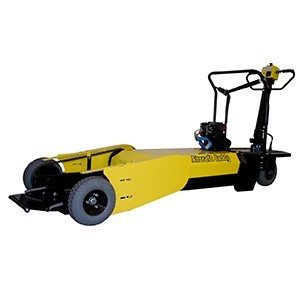
The battery operated aircraft tugs from Lindbergh Aircraft Tug Company allow a single ground crew member to easily maneuver an airplane around a crowded hangar or out onto the tarmac without generating any noise when compared to older style, fossil fuel operated tugs – and due to the fact that the aircraft tugs from Lindy are completely battery powered, airports will not only be cutting down on noise pollution but air pollution as well.

In order for airports to remain as successful as possible, they need to try and do whatever it takes to stay in the good graces of the communities around them.  A great way to be friendlier to the residents, the communities and environment around an airport is to limit the amount of noise and air pollution generated and a good way to do that is by upgrading the ground equipment to efficient and easy to operate, battery powered aircraft tugs.

“Harmony” to Make Aircraft Ground Equipment Operation Easier

Delays of any kind in the aviation industry can hurt business, in order to be as successful as possible and gain trust to foster return customers and airline needs to be on time with at an exceedingly high percentage.  While having a properly trained staff and reliable and easy to use aircraft ground equipment are of the utmost importance, even airlines that make every effort to be on time can suffer from delays from over crowding on the tarmac.

In an effort to help airline ground crews to be as efficient as possible, Metron Aviation has announced the release of a new product called Harmony that will help minimize tarmac delays, improve on-time percentages and hopefully reduce operational costs as well.  Metron Harmony allows airport personnel to integrate the real time air traffic conditions with predicted air traffic conditions to allow for the most accurate decision making in terms of scheduling.  The software will minimize the congestion on crowded tarmacs and allow for faster and easier movement of planes coming into and leaving the airport.  The predictive alerts offered by the software will help airport personnel to make the best decisions in terms of gate utilization and will keep overall operations of the ground crew and aircraft ground equipment easier and ultimately safer. 

Having the most efficient, battery operated aircraft ground equipment goes a long way toward helping to cut costs in operations and maintenance, but having the ability to see exactly when a plane needs to be moved with that aircraft ground equipment increase operational efficiency even more.  Using this unique and innovative software along with highly efficient and easy to operate ground equipment will ensure that an airport has as few delays on the airport surface as possible and that can only help to create repeat customers moving forward.

High Efficiency Shuttle Buses and Battery Powered Aircraft Tugs can Help Reduce Emissions

Philadelphia International Airport was just awarded a grant for close to five hundred thousands dollars from the Environmental Protection Agency in order to but eight brand new, high efficiency shuttle buses into operation to replace the older shuttle busses that the airport is currently using.  The new buses will reduce diesel emissions and make fro cleaner air and an all around healthier environment for airport employees and residents and visitors to the city. 

This planned upgrade is just the latest of many in airports all over the country who are taking the initiative and the necessary steps to become less dependent on fossil fuels and friendlier to the environment.  The improvements and upgrades aren’t just being made in the area of transportation vehicles; many airports are upgrading their ground equipment to battery powered aircraft tugs, adding solar panels to supply power and changing to more efficient lighting systems.

Battery powered aircraft tugs, like those offered by Lindbergh Aircraft Tug Company, are not only friendlier to the environment than older tugs and lifts that are powered by propane or gasoline, they are also much easier for ground crew employees to operate.  Aircraft tugs from Lindy are smaller than older styles of tug and they allow ground crew employees to make sharp turns and easily navigate their way inside of a crowded hangar or around busy staging ramps. 

The aircraft tugs from Lindy are also built with reliability and ease of use in mind, Lindbergh makes convenient aircraft tug solutions that can allow a single ground crew member to easily handle an airplane that weighs up to thirty five thousand pounds and these tugs can handle rough or rocky terrain and less than favorable weather conditions with no problems at all.  If you are looking to make upgrades that will reduce emissions and make for a cleaner and healthier atmosphere for employees and customers, but that will also help to increase the efficiency of your operation, battery powered aircraft tugs are a perfect solution

When it Comes to Ground Equipment and Jet Ramps, Switching to Electric Makes Dollars and Sense

A newly planned 2.2 million dollar upgrade to the jet ramps at the Long Beach Airport, slated to begin later this year, will give waiting planes access to electricity for power rather than forcing them to use their auxiliary motors for air conditioning, communications and baggage handling.  Allowing the jets to obtain necessary power from an electrical system will cut down on unnecessary use of costly jet fuel and it will drastically cut down on the exhaust/emissions created at the airport.

The jet ramp upgrade is only a small part of a proposed 136 million dollar upgrade that is planned to take place and be completed over the course of the next four years at the Long Beach Airport.  The upgrades will completely modernize the main terminal, several passenger areas, ramps and parking areas and though this seems like a monumental investment, the upgrades are completely necessary if the airport is to stay profitable.

Using less fossil fuels in both planes and aircraft ground equipment can help to make an airport more environmentally friendly and help to reduce overall operational costs and in the case of the ground equipment it can really help to increase the productivity and efficiency of the crew. 

The battery operated aircraft ground equipment from the Lindbergh Aircraft Tug Company is much more efficient and much easier to maneuver than older style propane or gas operated tugs.  The aircraft ground equipment from Lindy is also ergonomically designed and operates almost silently (especially when directly compared to outdated, gas powered tugs) so they create a much more pleasant and safer environment for employees, passengers and residents who live in surrounding neighborhoods.

Innovative Ways to Decrease Dependence on Fossil Fuels – From Aircraft Tractors to Wood Chip Jet Fuel

With every day that passes there seems to be more focus put on efforts for the aviation industry to become less dependant on fossil fuels and for operations to become more friendly to the environment.  Airports are turning to solar power, upgrading lighting, using battery operated ground equipment, converting fleets of ground transportation vehicles over to bio-diesel and researchers are even working on methods of fermentation with modified yeast in an effort to make a key jet fuel component from wood chips.

These “green” movements also tend to have serious financial benefits in addition to being better for the environment – once the initial investment has been recouped the cost of operation of things like energy efficient lighting and battery powered aircraft tractors is often much less than that of the retired equipment.  In the case of aircraft tractors like those offered by Lindbergh Aircraft Tow Company, airports also get an added benefit of safer, more reliable and more efficient operation when compared to older styles of propane or gas powered tractors.

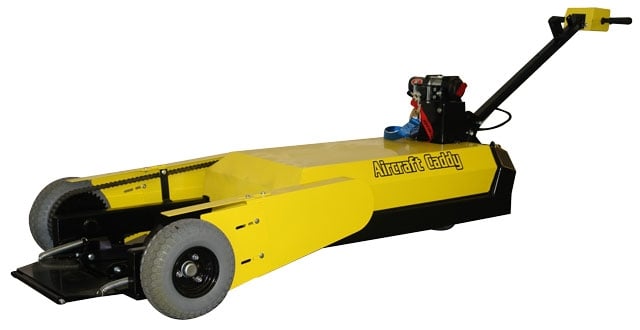
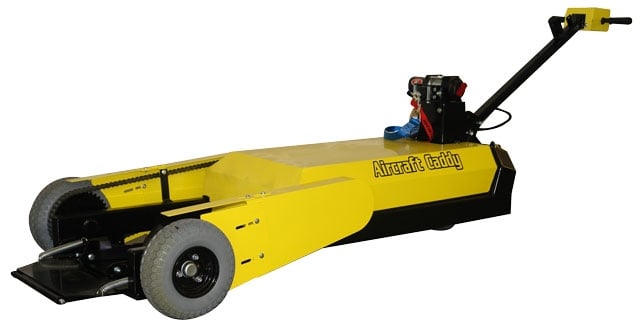
The aircraft tractors from Lindy, like all of their aircraft tug products, are designed with both safety and performance in mind.  The aircraft tractors are ergonomically designed to prevent injury and they are so simple to use that a single ground crew employee can easily maneuver a small plane around the hangar or runway without any hassle, even in tight quarters.  Once the cradle has been moved into place under the nose wheel and the nose wheel has been locked into place the ground crew employee can use the fifth wheel style of turning to move the airplane a full 180 degrees without any need for manipulating the planes steering mechanism.

In order for airports to stay successful and stay profitable, investments need to be made.  While spending the money on battery powered aircraft tractors, solar panels and energy efficient lighting may seem like a lot to bare each of these investments will end up paying for themselves and paying large dividends at some point down the road.

Using Helicopter Tugs for Speedy Response

A helicopter can be the best friend of a person in need of emergency rescue or transport or of the police who need a pair of eyes in the air during a dangerous pursuit.  Many of the jobs that helicopters are used for involve people in life and death situations, so it’s critical that when a call goes out for a helicopter, that the response time is as short as possible.

The crews that operate helicopters aren’t nearly as large as the ground crews for planes, so in order to get a helicopter from the hangar to the pad as quickly and efficiently as possible, there needs to be a reliable, high quality helicopter tug available.  The helicopter tugs from Lindbergh Aircraft Tug Co. are not only safe and reliable, but they easily allow a single crew member to maneuver a helicopter of up to fifteen thousands pounds into and out of the hangar.

Helicopter tugs from Lindy offer a very smooth and even ride over hard, soft or rough surfaces.  Crews can use these helicopter tugs just as easily on grass, gravel or snow as they can on a smoothly paved runway.  The tugs from Lindy are also capable of handling whatever mother natures decides to throw at them, which is good because emergencies rarely wait for warm and sunny days.  A single crew member can easily maneuver a helicopter to and from the hangar in the harshest of weather conditions, including snow, sleet and heavy rains.  When the job is complete the small and sleek but powerful helicopter tugs are easy to store and easy to power up via the built in charger. 

You can’t hope to have a truly rapid response time to an emergency if the equipment you are using to tow your helicopters is slow and unreliable.  The helicopter tugs from Lindy can help to ensure that your helicopters are exactly where they need to be when they are needed, regardless of the weather or conditions outside.

Versatile Plane Tow Solutions for Large and Small Airports

Large airports may have hundreds of airplanes flying out and coming in each day, planes of a wide variety of different sizes and weights and each of them will ultimately need to be either jockeyed out onto the runway or parked in a crowded hangar.  Even the smallest of local airports could have a few different sized planes and helicopters coming in and out on a regular basis and might require more than just a single plane tow to be fully functional.

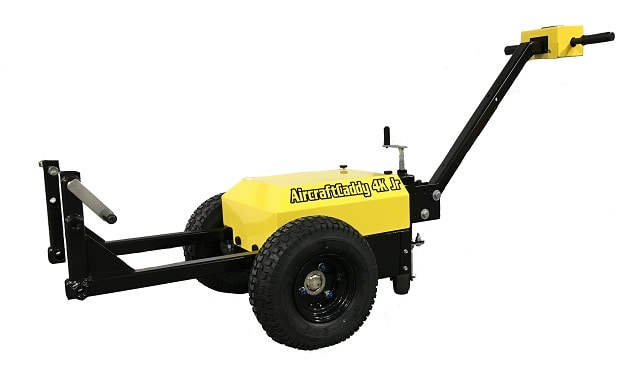
Lindbergh Aircraft Tug Co has a wide variety of plane tow options to satisfy the needs of growing and busy airports of all sizes.  The smallest aircraft tug that Lindy offers allows a single ground crew member to easily maneuver planes of up to four thousand pounds around the tightest of hangars, and this tug is so compact that it requires very little in the way of storage space.

The 4k airplane tug is just the tip of the iceberg when it comes to reliable and easy to use airport equipment from Lindy – we have plane tow options that easily handle planes of up to thirty-five thousand pounds and equipment for safely handling helicopters and heavy trailers as well.  Each plane tow and tug from Lindy is designed to not only be easy to use, but completely safe and cost effective.  The ergonomic design makes plane tows from Lindbergh very user friendly and helps to minimize any chance of injury and the compact design and reliable battery operation cuts both operation and maintenance costs.

There is no “one size fits all,” type of equipment for an industry that is complex as the aviation industry, if an airport is to operate as safely and efficiently as possible a wide variety of equipment will need to be used on a daily basis.  Lindy offers some of the safest and most versatile plane tows in the industry and with the wide selection of tows and tugs that Lindy manufactures; we can satisfy the equipment needs of airports of all sizes.

Reliable Airplane Tugs help Minimize Effects of Delays

Uncontrollable delays are possible at any time, accidents, acts of God and power outages can lead to plenty of problems at airports.  Just a few days ago at the very busy Philadelphia International Airport, a fuel truck tipped spilling upwards of two thousand gallons of fuel on a service road neighboring a terminal.  The spill affected flights at nearly half of the terminals twenty six gates causing delays of up to two hours for some flights.

In the event of an unforeseen incident like this, the only thing that airport staff can hope to do is shorten the delay by being as prepared as possible once the official clearance to fly again comes through.  Airplane tugs and their operators must be reliable, efficient and free from the possibility of failure to ensure that passengers get on those flights as soon as possible.

Old, outdated airplane ground equipment is not only prone to failure but it may be too cumbersome and difficult to operate for a single airport worker to accurately navigate a plane around tight quarters.  Older tugs are often loud and not designed properly to prevent over use and stress injuries.  Airplane tugs from Lindbergh are among the safest and most efficient in the aviation industry.  Lindy’s airplane tugs are quiet, easy to operate and ergonomically designed to keep the airport ground crew as safe as possible during operation.

For smaller airports and smaller planes an airplane tug like the AircraftCaddy 15k allows a single ground crew member to easily handle an airplane of up to fifteen thousand pounds and the sleek, compact design allows for hassle free maneuvering in even the most crowded hangars.

Easy to use, reliable and quick operating equipment are keys to helping airport employees set the stage for take off once an unforeseen circumstance that has caused a delay has been cleared up.

Airplane Movers – The Perfect Solution for Small Airports

Smaller local and private airports have the very same needs in terms of equipment as larger airports, but the equipment needs to be on a smaller scale.  The same big, bulky airplane movers, tractors, tows and tugs that taxi around 747s in huge international airports would not work well in a small facility with smaller airplanes.

A small airport won’t likely have either the room to navigate some giant, gas powered airplane mover or have the ample space in the hangar that would be required to store it.  A large aircraft tug would also probably carry too high of an operational and maintenance cost to be used in a smaller scaled facility.

An airport that has a hangar with limited space for storage and only a short span of ground leading to the runway needs an airplane mover that can easily maneuver a plane in tight quarters.  Small airports also may have staffing issues that would often require a single member of the crew to be able to handle moving the aircraft; this means that the aircraft tug or tractor must be powerful, reliable and easy to use.

Airplane movers from Lindbergh are not only among the most reliable tugs available, but they effortlessly slide under the nose wheel of the plane making it incredibly simple for a single employee to engage the equipment and get the plane moved.  The compact design of these aircraft tractors let’s an employee easily maneuver an aircraft of up to four thousand pounds in the tightest of quarters safely and efficiently. 

Just like all of the tugs and tows available form Lindbergh, these small airplane movers are ergonomically designed to keep the minimal staff of the smaller airports safe and healthy so there are fewer man hours and days missed and that the smaller operations stay as functional as they need to for success.

Using the Right Equipment for Aircraft Towing Makes All the Difference

Using improper equipment or not strictly adhering to the safety guidelines imposed by the FAA can not only result in dangerous situations, but it can result in steep fines as well.  Spirit Airlines was recently notified of a proposed FAA penalty of $50,000 for knowingly operating an aircraft with a mechanical problem.

Though the problem at Spirit is currently being contested and a spokesperson from the airline has commented that the company’s first priority is safety and that all appropriate procedures had been followed, the press associated with such an event is never good.

Whether it’s boarding, fueling, routine maintenance or aircraft towing – all equipment used and procedures followed must strictly adhere to the safety regulations set in place by the FAA.  Attempting to tow an aircraft with the wrong type of equipment can not only make the process more difficult, but it can do damage to the equipment and to the aircraft itself, potentially putting the passengers and crew at risk.  Tugs for aircraft towing should be sized properly for the planes and helicopters that they are stationing on the runway and they should be completely reliable and safe for employees to operate.

That’s just part of the reason why the tugs from Lindbergh for towing aircraft are becoming some of the most popular in the industry.  Lindy makes industrial strength and ultra reliable tugs for aircraft towing in three different sizes to easily handle planes as small as four thousand pounds all the way up to planes that weigh thirty five thousand pounds.  With that wide of a variety of aircraft tow tugs, Lindy can provide the perfect size equipment for virtually any small airport, which will help to ensure the aircraft reaches the runway as efficiently and safely as possible.