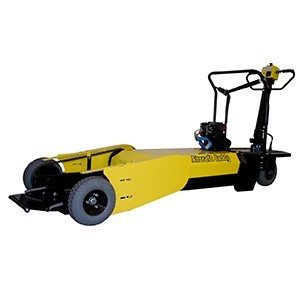


Electric Aircraft Tug & Motorized Aircraft Tow
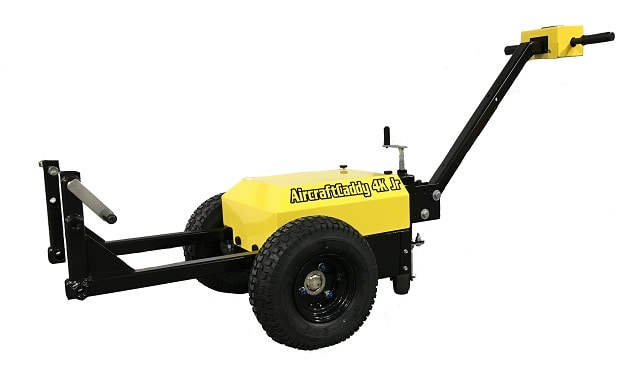
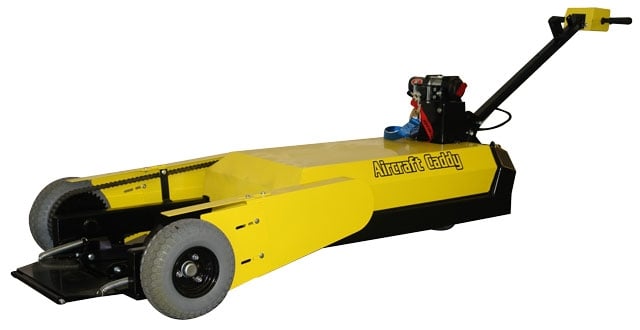
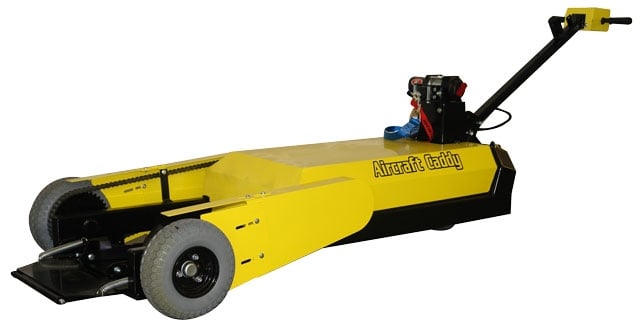
DJ Products, Inc. is dedicated to making high quality, industrial strength, competitively priced electric aircraft tugs for aircraft owners, aviation schools, and fixed-base operators (FBOs). We take great pride in offering exceptional customer service and satisfaction before, during, and after our sale process. Our battery powered, walk-behind, electric aircraft tug is designed for one person to maneuver aircraft safely and easily in tightly stacked hangars or staging on the aircraft ramp.
The AircraftCaddy’s twist-grip, variable-speed handlebars allow for smooth acceleration and braking, which eliminates the jerkiness found in gas powered tugs. The quietness of the electric motors on the AircraftCaddy allows an operator to maneuver their aircraft safely while having full use of sound, sight, and touch. The versatility and quality of our aircraft tugs are perfect for any aircraft push-back towing application up to 35,000 lbs. for individual, FBO, or corporate aircraft ground equipment.