Global Accident Rate for Western-Built Airplanes Reaches All-Time Low

According to the International Air Transport Association (IATA), the accident rate for western-built airplanes in 2011 was the lowest ever in aviation history. The rate surpasses the previous lowest rate set in 2010.

Measured by the number of hull losses that occurred per million flights made by Western-built airplanes, the 2011 worldwide aviation accident rate was 0.37, meaning that one accident occurred for every 2.7 million flights. It is a 39% improvement compared to last year’s accident rate, which was 0.61 or one out of every 1.6 million flights.

A total of 92 aviation accidents happened throughout the world in 2011, which was two less than the number of accidents in 2010. The number of fatalities dropped from 786 in 2010 to just 486 in 2011.

Most regions around the world saw improvement in their aviation accident rates, except for North Africa and the Middle East. The accident rate in these two regions rose from 0.72 in 2010 to 2.02 in 2011. The African continent as a whole improved its accident rate by 56%, from 7.41 in 2010 to 3.27 in 2011, but it is still the region with the worst performance. South America and the Caribbean also managed to achieve a better accident rate, from 1.87 in 2010 to 1.28 in 2011. Regions that performed better than the worldwide average rate of 0.37 were Europe (0.0), North America (0.10), North Asia (0.0), and Asia-Pacific (0.25).

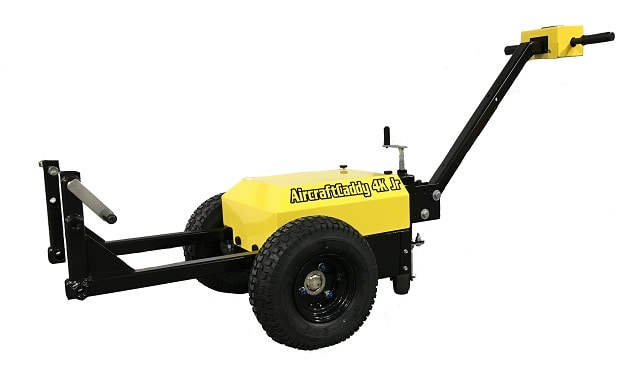
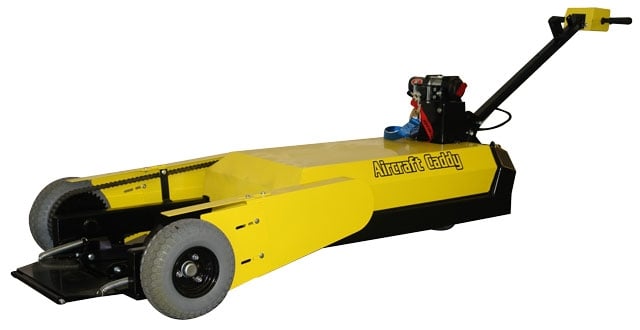
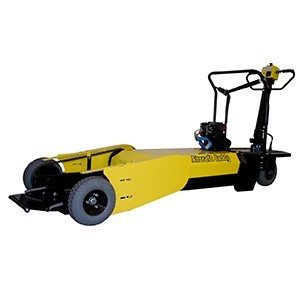
Airplane accidents do not only occur during flight; they can also happen when airplanes are being moved in airports or airfields. Airports and FBOs can minimize the risk of accidents by using ground handling devices that are effective in enhancing safety, such as aircraft tugs. Lindbergh Aircraft Tug Company offers a wide range of airplane tow tugs that can enhance ground worker safety and reduce damage to aircrafts.

Tough Times for Airline Business

A trade association for major airlines in the United States, Airlines for America, said that the airline industry earned a profit of less than half a penny for every dollar of revenue that was generated in 2011. This poor profit performance was not just a stroke of bad luck. Over the past ten years, airlines have collectively lost approximately $50 billion.

CEO of the trade group, Nicholas Calio, said that changes have to be made to improve the profitability of the airline industry, and he recommended the implementation of a “National Airline Policy”. The policy is expected to serve five important functions, namely, reduce regulations, lower taxes, remove foreign investment limits, upgrade infrastructure, and reduce speculation of oil prices.

The hard part, however, is to get the Congress to act. According to Calio, in the past few decades, the government has had a policy that generally neglects the profitability of airlines, and the industry is “withering” as a result of that. The association has already submitted a 59-page document to propose its plan to the Department of Transportation. Additionally, it has begun to work with relevant members of the Congress to pass the legislation required for the implementation of a revival plan for the aviation industry.

One of the things that airlines, airports, and FBOs can do to gain greater profit is to use advanced equipment to reduce costs. Aircraft tugs make the process of moving airplanes on the ground a lot easier and more efficient, and they can help cut labor costs significantly. Check out the extensive selection of high quality airplane tow tugs that are offered by Lindbergh Aircraft Tug Co.

The Pros and Cons of Buying a Very Light Jet

The very light jet, or VLJ, is one of the latest innovations in the aviation industry. It is defined by the National Business Aviation Association as a single-pilot jet with a weight of 10,000 pounds or less. Typically, a VLJ has a seating capacity of five or six passengers, an automated cockpit, and two engines.

The main advantage of getting a VLJ is that it costs a lot less than larger aircrafts. For instance, the average cost of an Eclipse 500 VLJ is about $1.5 million, whereas a new Hawker 400XP light jet costs around $7 million and the mid-sized aircraft Citation Sovereign costs close to $16 million. Also, the cost of operating a VLJ is very much lower, with its variable operating cost per hour (including fuel, maintenance, insurance, and replacement parts) amounting to roughly $370. On the other hand, it costs $1,447 to fly the Hawker 400XP for an hour and $1,974 to fly the Sovereign.

Being “very light”, a VLJ comes with a very small cabin, which can be just slightly more than 4 feet high. In comparison, a light jet or mid-sized jet usually has a cabin height of around 5 feet or more. Another concern with the VLJ is its baggage space, which can be as little as 16 cubic feet. Due to its lack of space, the VLJ is not a preferred option for those who wish to travel in larger groups.

Whether you are purchasing a VLJ or a larger aircraft, you need to have the right equipment to move it efficiently and safely while it is on the ground. A small plane tug is the perfect device for moving your aircraft on land, and it can help you save time, effort, and money. Lindbergh Aircraft Tug Co. has superior quality aircraft tugs for moving all kinds of small aircrafts, and all its products are competitively priced.

New Airplane Tugs Reduce Carbon Emissions

With traditional equipment and traditional procedures, day to day airport operations can really take a toll on the environment. In an attempt to make operations friendlier to their surroundings many airports are actively taking steps to reduce the amount of emissions they produce through a wide variety of strategies.
A simple, effective and affordable strategy that can instantly help make airport operations greener is upgrading to new, battery powered airplane tugs. Battery powered tugs use no fossil fuels during operation or idling which makes them a far friendlier choice for the environment than tradition combustion engine tugs.
Airports can also use their new battery powered airplane tugs to conduct all ground movement of planes. This allows airports to keep jet engines turned off which dramatically reduces the emissions produced during daily operations.
Keeping jet engines turned off whenever possible has additional benefits for airlines as well. By moving airplanes with battery powered airplane tugs airlines can reduce the total amount of costly jet fuel that they use on a daily basis. This dramatic reduction in jet fuel consumption could result in a serious reduction in the cost of airport operations.
Using battery powered airplane tugs for all ground movement also creates a quieter and ultimately safer working environment for ground crew employees. Combustion engine tugs are loud and the incessant noise produced can have a negative effect on both humans and animals living in close proximity to the airport. Battery powered airplane tugs operate virtually silently creating a more pleasant environment for neighbors and eliminating distractions for ground crew employees.
Some upgrades can easily cost hundreds of thousands or even millions of dollars to implement. Airports that want to reduce the environmental impact of operations and improve working conditions, without spending beyond their allotted budget, should consider upgrading to battery powered tugs.

U.S. Airlines Providing a Higher Level of Safety

Since the advent of the Jet Age in the 1950s, airlines in the United States have been providing safer air travel. Between July, 1994 and January, 1997, an airliner crash occurred at least once every 3 months, taking the lives of 805 people altogether. It has been about a decade since passengers have been killed in the crash of a commercial airplane carrying over 100 people. This shows that airline safety has indeed improved tremendously.

One of the reasons for this dramatic improvement in airline safety is government intervention. After 230 people were killed in the explosion of TWA Flight 800 in 1996, President Bill Clinton established a commission to call on the airline industry to lower the airline accident rate by 80% in the next 10 years. This resulted in the formation of the Commercial Aviation Safety Team, or CAST. The responsibility of this team is to analyze airline accident data and propose improvements.

Some of the improvements that airlines made after the establishment of CAST included more extensive discussion on landing between pilot and co-pilot, training of crew members on how to spot ice on the wings of airplanes, installation of “terrain avoidance” systems and bad weather warning devices, and others. Due to these improvements, all airlines in the United States were able to make air travel a lot safer. Presently, the odds of an airplane belonging to a U.S. airline going down and causing fatalities is 1 in 49 million, which is 93% lower than the rate recorded from 1994 to 1998.

Airplane accidents can occur both in the air and on the ground. To minimize accidents on the ground, airlines, airports, and FBOs have to use ground support equipment that can promote safety. One of the devices that they should use is aircraft tug. A powered aircraft tug can lower the chances of an aircraft being damaged and ground workers getting injured, and it can help reduce operational costs as well. Lindbergh Aircraft Tug Company produces high quality airplane tow tugs that can help airports, airlines, and FBOs provide safer and more efficient ground support.

Heathrow Preparing for Great Olympic Exodus

While athletes and spectators may be counting down to the opening ceremony of the London Olympic Games on the 27th of July this year, the managers of Heathrow Airport are more concerned with the day after the closing of the event. Athletes, officials, and spectators will arrive in London on different days before the games, but most of them will depart on the same day, resulting in a great exodus.

Heathrow is expecting about 137,800 passengers to depart on the 13th of August, which is a 45% increase in the number of departures. This makes the day the busiest ever in the long history of the airport. According to Heathrow’s head of Olympic planning, Nick Cole, all the single seats that are available will be filled on the day, which is something that the airport has never experienced before. It will certainly be a very busy summer for Heathrow, with the 16th and 26th of July being a little busier for arrivals and the 13th and 15th of August being extremely busy for departures. Heathrow also published a document to reveal its forecast on luggage figures. The number of luggage items is expected to increase by 35% to 203,000 on the 13th of August.

Since the airfield at Heathrow will be filled to capacity during the Olympic months, charter aircrafts and private jets will have to use other airports. Both large and small airports in and around London will experience a significant increase in traffic shortly before and after the Olympic Games, and they will need the right equipment to provide efficient ground support. This is the time when airports and FBOs will find aircraft tugs very useful, because they can make the task of moving airplanes on the ground easier and more efficient, as well as reduce costs. Lindbergh Aircraft Tug Company produces airplane tow tugs of the highest quality, and its products will be a great asset to any airport or airbase.

Tips for Purchasing Airport Ground Equipment Online

Whether you are running an FBO or airport, you need to have the necessary equipment to provide efficient and safe ground support. Certain types of airport ground support equipment and supplies can be very costly, and they can affect the profitability of your airport or FBO significantly. One way to cut down on your expenses is to try to find a supplier that offers good value for your money. Shopping for aircraft ground equipment on the Internet is the best way to find good deals, because it allows you to compare prices and avail of special discounts. Here are tips on how to purchase airport ground equipment online.

Before you start looking for airport ground equipment suppliers, you have to make a list of all the ground support equipment and supplies you need. These may include runway maintenance supplies and devices, ramps, storage, cargo gear, fueling devices, aircraft deicing equipment, baggage handling devices, aircraft tugs, and others. If you are not sure what kinds of equipment and supplies you need, you can read aviation magazines and articles to find out about the latest aircraft ground handling products.

Use a regular or specialized aviation equipment search engine to locate websites that sell airport ground support products, and shortlist a few that offer high quality equipment at competitive prices. Then, send all the shortlisted companies detailed information on all the equipment and supplies you need, and ask them to give you a quote on all the items. After receiving quotes from the suppliers, you can compare their prices and choose the one that offers the best deal. If you are purchasing a lot of items, you can try to negotiate for better prices.

It is also a good idea to buy certain devices or supplies directly from manufacturers. If you need to purchase equipment to move aircrafts efficiently in your FBO or airport, you can check out Lingbergh Aircraft Tug Company’s great selection of high quality and reasonably priced airplane tow tugs.

Measuring the True Value of an FBO

If you are not based in a rural airport and do not have your own hangar and fuel supply, you will most likely have to use a fixed based operation, or FBO, service. There are numerous FBOs across the United States, and you can easily find one that is located close to your home. However, the quality of aviation service provided by FBOs can vary greatly, and you have to make sure that the FBO that you are using offers good value for money.  Here are some questions that you need to ask to determine the true value of an FBO.

Service

• Is the staff in your FBO committed to delivering high quality service to you and your passengers on a consistent basis?
• Does your FBO use aircraft tugs and other kinds of equipment to make your ground service experience more pleasant and hassle-free?
• Can it service your tires and O2 quickly when necessary?
• Can you get fresh water and toilet serviced?
• Does your FBO provide automotive ramp access?
• Does the staff treat you in a courteous and professional manner?

Safety

• Have the workers, technicians, and management team undergone the necessary training to deliver high quality service in a safe manner?
• Does the staff have enough experience to meet all aircraft safety requirements?
• Does the FBO request or require a liability insurance waiver?

Facility

• Is the FBO facility modern and clean?
• Does the FBO have all the amenities you need?
• Does it use the most advanced equipment to provide the most efficient and safest aviation service possible, such as powered airplane tow tugs?

Cost

• Are your FBO’s fuel prices and ramp fees competitive?
• Considering the service, safety, and facility provided by the FBO, is the price that you are paying reasonable?

Airfares Likely to Keep Rising in 2012

Higher oil prices forced airlines to increase airfares last year, and this is likely to continue into 2012, say air travel experts.

According to the United States Department of Transportation, an increase in oil prices in the first quarter of 2011 pushed airfares up by 8.5%. One airline attempted to raise its airfares 22 times over the course of last year, and nine of its attempts were successful.

Rising airfares may result in a decrease in demand for air travel, and many airlines are taking measures to counter the possible decline in air ticket sales. George Hobica, who founded the popular air travel website AirfareWatchdog.com, said that some airlines are considering cutting the number of seats on their flights, while others are thinking of merging with other airlines to eliminate competition.

But, how much higher will airfares be this year? Carlson Wagonlit Travel is predicting that airfares in North America will rise by 3.5% to 4.1%. Other experts believe that fares can go even higher because of increased regulation and other factors.

While airlines do not have control over certain costs, such as fuel costs, they can find other ways to make their operations more cost-effective. Airlines that use small aircrafts can cut costs significantly by investing in Lindbergh aircraft tugs. With these high-performance tow tugs, they do not have to assign so many employees to move their airplanes, allowing them to reduce labor costs. Airplane tow tugs can be operated by just one or two people, and they make the process of towing aircrafts a lot more efficient. Also, they are specifically designed to provide maximum protection for aircrafts while they are being moved, resulting in lower maintenance and repair costs.

Tips for Winter Flying

Flying in the winter can be fun, but it also exposes you and your aircraft to certain hazards. Strong winds, drifting snow, and icy conditions can make it difficult for you to keep your aircraft under control, both in the air and on the ground. If you want to have a safe and enjoyable flight, make sure you follow these winter flying tips:

• If the hangar is available, keep your aircraft there the night before the flight.
• If you cannot gain access to a hangar, use engine and wing covers to protect your aircraft. Make sure that the propeller, windshield, tail, and top of the cabin are properly covered as well.
• Preheat your aircraft’s engine with an electric heater, firewall-mounted heater, or a Tanis preheating system.
• Keep fuel tanks full to prevent condensation.
• Dress warmly both on the ground and in the plane.
• Understand the winter operating capabilities of your aircraft. If you are using skis, make sure that your aircraft has enough power to run through deep snow and avoid making sharp and abrupt turns.
• Keep the engine warm during letdown.
• Plan an alternate landing site in case the weather in your destination does not allow a safe landing.
• Take time to look out for snow drifts and other hazards before landing.
• After the flight, fill up the fuel tanks, and cover and tie down your aircraft.
• Make sure you have a survival kit to help you overcome emergency situations. The kit should include enough food to last for two weeks, first aid kit, hatchet or ax, knife, firearm and ammunition, matches, and signaling devices.

Moving your aircraft around in the airbase can be difficult during winter. As such, it is advisable that you use a powered aircraft tug. Lindbergh offers a wide range of airplane tow tugs that can make the task of moving aircrafts easier, more efficient, and safer during winter.